



What to Do After Your Serve in Tennis (First Shot Strategy for Beginners)
If you are trying to understand what to do after serve tennis, you are asking the right question.Most beginners work on their serve. They improve placement, power, and consistency. However, they still lose points immediately after serving. This is where matches are actually decided.The serve does not win the point. The next shot decides whether you stay in control or lose it. At Infinity Racquet Club in Katy, this is one of the first gaps we fix. Players learn how to connect the serve with the next shot, not treat them as separate skills.
Why Most Players Lose Points After Serving
The issue is not technique. It is what happens between shots.
After serving, most players:
-
Pause instead of moving
-
React late to the return
-
Hit the next ball without a decision
They treat the serve as the end of effort. In reality, the serve only creates the opportunity.
When you serve, you are usually in a slightly better position than your opponent. If you do nothing with that advantage, the rally resets and your serve becomes meaningless.
The Core Concept: Serve + 1
Instead of thinking about the serve alone, think in a sequence:
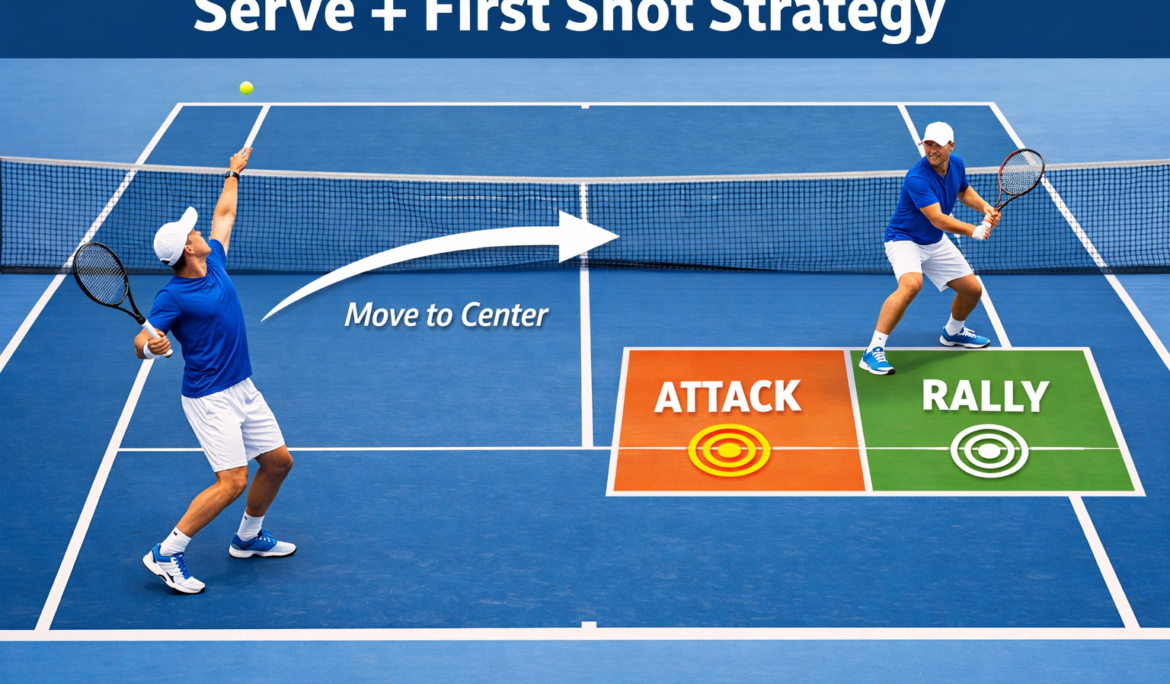
Serve → First shot → Control of rally
This is called “serve plus one.”
Better players are not just serving better. They are using the serve to create an easier next ball.
For example:
-
A wide serve pulls the opponent off the court, opening space for your next shot
-
A body serve creates a weak return, giving you a chance to step in
Even at the beginner level, this thinking changes how you play points.
Step 1: Recovery Decides Everything
The biggest mistake after serving is staying still.
As soon as you finish your serve:
-
Move slightly inside the baseline
-
Get balanced
-
Prepare for the next ball
This movement is small but critical.
If you watch your serve instead of recovering, you lose time. That delay forces you to react instead of control.
At our tennis lessons in Katy, we treat recovery as part of the serve, not a separate action.
Step 2: Reading the Return Early
You do not need perfect anticipation. You need early recognition.
As your opponent makes contact, you should immediately read:
-
Depth – is the ball short or deep
-
Speed – is it slow or fast
-
Quality – is it controlled or weak
This is where decision-making begins.
A short return gives you time. A deep return forces you to stay neutral. A weak return invites you forward.
Most beginners wait for the ball to arrive before deciding. That is always too late.
Step 3: Decide Before the Ball Reaches You
This is the difference between structured play and random play.
You should already know what you are going to do before the ball reaches you.
If you decide late:
-
You rush
-
You mistime
-
You lose control
If you decide early:
-
Your movement is smoother
-
Your shot is cleaner
-
Your positioning improves
This is why experienced players look calm. They are not faster. They are earlier in their decisions.
What to Do After Serve Tennis (Real Match Situations)
Now apply this to actual situations.
1. Short Return – Take Control Early
When the return lands short, you have time and space.
You should:
-
Move forward
-
Take the ball early
-
Play an aggressive shot into open space
This is the easiest opportunity to control the point.
Most beginners waste this by pushing the ball back. That gives the opponent time to recover.
2. Deep Return – Stay Neutral, Do Not Force
A deep return is not a problem. It simply removes your immediate advantage.
Your job here is:
-
Stay balanced
-
Play a high-percentage shot
-
Keep the rally stable
Trying to hit a winner from this position usually leads to errors.
Control matters more than aggression here.
3. Weak Return – Move Forward and Finish
A weak return gives you a clear advantage.
You should:
-
Step in
-
Hit an approach shot
-
Move toward the net
From here, you can finish the point with a volley.
If your volley is not strong, work on it here:
/how-to-volley-in-tennis/
This is one of the fastest ways to start winning points.
4. Aggressive Return – Absorb and Reset
Sometimes the return comes back fast and deep.
In this situation:
-
Do not panic
-
Do not try to out-hit immediately
-
Focus on staying in the rally
A controlled defensive shot can bring you back into a neutral position.
Where Most Beginners Go Wrong
The biggest issue is not lack of skill. It is lack of decision.
Common mistakes include:
-
Standing still after serving
-
Playing the same shot regardless of return
-
Trying to hit winners too early
-
Not adjusting position after serve
-
Ignoring the quality of the return
These mistakes make improvement feel slow, even when practice is consistent.
Why Practicing Serve Alone Does Not Work
Many players spend time only on serves.
They improve:
-
Toss
-
Contact
-
Direction
But in matches, they still struggle.
This happens because the serve is never used in isolation. It is always followed by a decision.
If you do not train that decision, your progress will feel incomplete.
The Drill That Actually Improves This
Instead of practicing long rallies, isolate the situation.
Serve + first shot drill:
-
Serve normally
-
Partner returns or coach feeds
-
Play only the next shot
-
Stop and reset
Focus on:
-
Recovery timing
-
Early reading
-
Correct decision
At Infinity Racquet Club in Katy, this is a core part of beginner training. It builds match awareness, not just technique.
How This Connects to Your Overall Game
If you feel stuck in your progress, this is usually the missing link.
You may already know:
-
How to serve
-
How to rally
But you are not connecting them.
That gap causes inconsistency.
When you learn what to do after serve tennis, your game starts to feel structured. Points become easier to manage.
If you want a complete pathway, you can follow a structured program here:
/beginner-tennis-curriculum-katy/
Quick Summary
-
The serve creates the advantage, it does not finish the point
-
Recovery after serve is critical
-
Read the return early
-
Decide before the ball reaches you
-
Adjust your shot based on the situation
-
Think in patterns, not single shots
FAQs
What should I do immediately after serving in tennis?
Move into position, recover quickly, and prepare for the next shot.
Why do I lose points after a good serve?
Because of slow recovery and poor decision-making on the next ball.
Should I attack after every serve?
No. Attack only when the return gives you an advantage.
What is serve plus one in tennis?
It is the first shot you play after your serve, which helps control the rally.
How can I improve what to do after serve tennis?
Practice serve and first-shot situations instead of practicing serves alone.
Conclusion
Improving your serve will help, but it will not change your results on its own.What changes your results is what happens after.When you understand what to do after serve tennis, you stop reacting and start controlling points. That is where real improvement begins.