


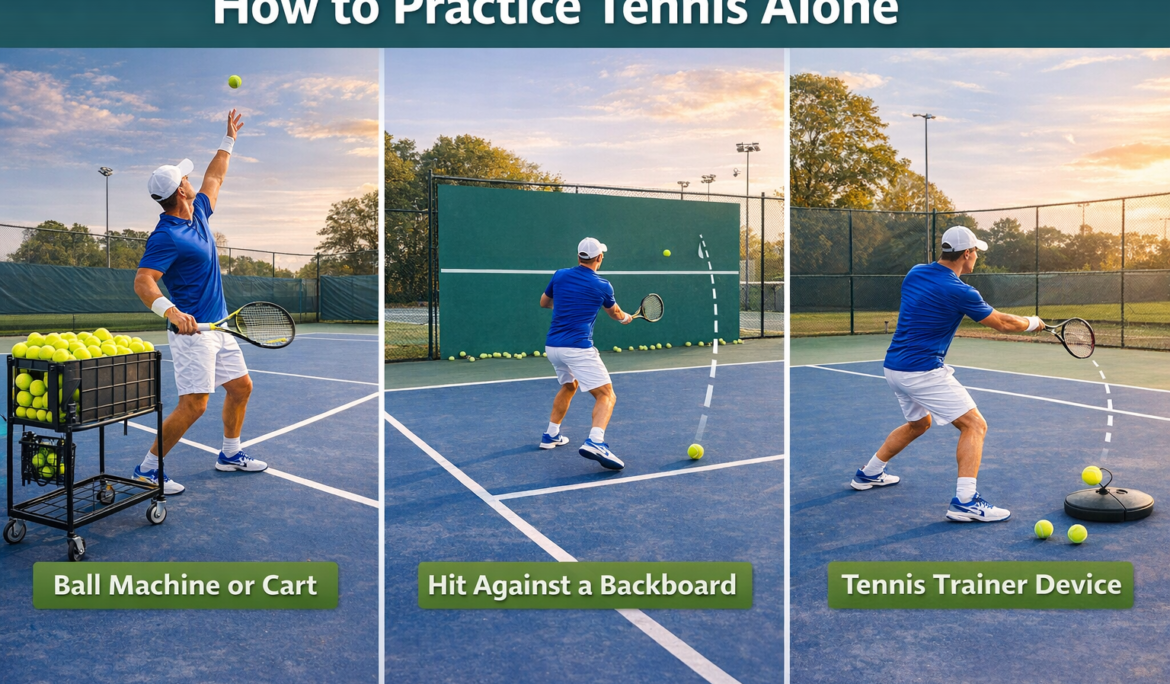
How to Practice Tennis Alone (Even Without a Partner or Coach)
Most beginners stop improving because they don’t have a partner to practice with. However, the truth is simple — you can still improve fast if you know how to practice tennis alone the right way.
At Infinity Racquet Club in Katy, we regularly train players who practice solo between sessions. The players who improve fastest are not the ones who play more matches, but the ones who practice with structure.
This guide shows exactly how to practice tennis alone using simple drills that actually translate into real match performance.
Can You Really Improve Without a Partner?
Yes — but only if your practice is intentional.
Random hitting does not improve your game. Structured repetition does.
When you practice alone, you control:
-
Repetition volume
-
Shot consistency
-
Footwork habits
-
Timing and contact
That is why solo practice is one of the fastest ways to build fundamentals.
The 5 Best Ways to Practice Tennis Alone
1. Wall Practice (Most Effective Method)
If you only use one method, use this.
A wall gives you:
-
Unlimited repetitions
-
Immediate feedback
-
Consistent rhythm
How to do it:
-
Stand 10–15 feet from the wall
-
Hit controlled forehands continuously
-
Focus on clean contact, not power
Progression:
-
Forehand → Backhand → Alternating
-
Add movement (left-right recovery)
This directly improves rally consistency.
2. Serve Practice (High Impact Area)
Serve is the only shot you fully control. Therefore, practicing alone here gives the biggest return.
What to focus on:
-
Toss consistency
-
Contact point
-
Target placement
Simple drill:
-
Place targets in service box
-
Hit 20 serves per target
-
Track how many land inside
Players who practice serves alone improve faster than match-only players.
3. Shadow Swings (Underrated but Powerful)
Most beginners ignore this, but it fixes technique quickly.
How it works:
-
No ball involved
-
Focus only on movement and form
What to practice:
-
Forehand swing path
-
Backhand preparation
-
Split step timing
This builds muscle memory without pressure.
4. Drop Feed + Self Rally
This simulates real hitting without a partner.
How to do it:
-
Drop ball → hit forehand → recover
-
Repeat continuously
Focus:
-
Balance
-
Footwork recovery
-
Shot control
You are training the first 2–3 shots of a rally, which matters most in matches.
5. Footwork & Movement Drills
Tennis is not just hitting — it’s movement.
Simple solo drills:
-
Side-to-side shuffle (baseline)
-
Split step + react
-
Cone drills for direction change
Good movement improves every shot automatically.
Weekly Solo Practice Plan (Beginner Friendly)
| Day | Focus Area | Duration |
|---|---|---|
| Day 1 | Wall Practice | 30–45 min |
| Day 2 | Serve Practice | 30 min |
| Day 3 | Footwork + Shadow | 20–30 min |
| Day 4 | Wall + Movement | 40 min |
| Day 5 | Serve + Drop Feed | 30–40 min |
Consistency matters more than intensity.
Common Mistakes When Practicing Alone
Most players waste time because they do this:
-
Hitting without purpose
-
Focusing only on power
-
Ignoring footwork
-
Not tracking progress
-
Practicing too randomly
Instead, every session should have:
-
One clear focus
-
Measurable repetition
-
Controlled intensity
What You Still Cannot Learn Alone
Solo practice is powerful, but not complete.
You still need:
-
Match play experience
-
Tactical decision-making
-
Real opponent pressure
That is why combining solo practice with structured coaching gives the best results.
At Infinity Racquet Club, we help players connect their solo training with real match situations.
How Infinity Racquet Club Helps Players Improve Faster
Many of our players in Katy practice alone between sessions. However, what makes the difference is structured training, coach feedback, and progress tracking.
We guide players on exactly what to practice when they are not in class. This removes guesswork and accelerates improvement.
Final Thought
If you are waiting for a partner to improve, you are already slowing down.
Once you understand how to practice tennis alone, you unlock consistent progress.
Start simple:
-
Wall practice
-
Serve repetition
-
Movement drills
Do it consistently, and your game will improve faster than you expect.
FAQs
How can I practice tennis alone at home?
You can practice using a wall, shadow swings, and footwork drills. These methods improve consistency and technique without needing a partner.
Is wall practice good for beginners?
Yes. Wall practice builds timing, control, and consistency faster than random match play.
How long should I practice tennis alone?
30–45 minutes per session is enough if the practice is structured and focused.
Can I improve my serve alone?
Yes. Serve practice is one of the most effective solo training methods since you control every repetition.
Do I still need a coach if I practice alone?
Yes. Solo practice builds skills, but coaching helps correct mistakes and improve strategy.