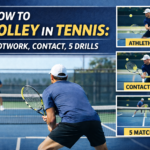




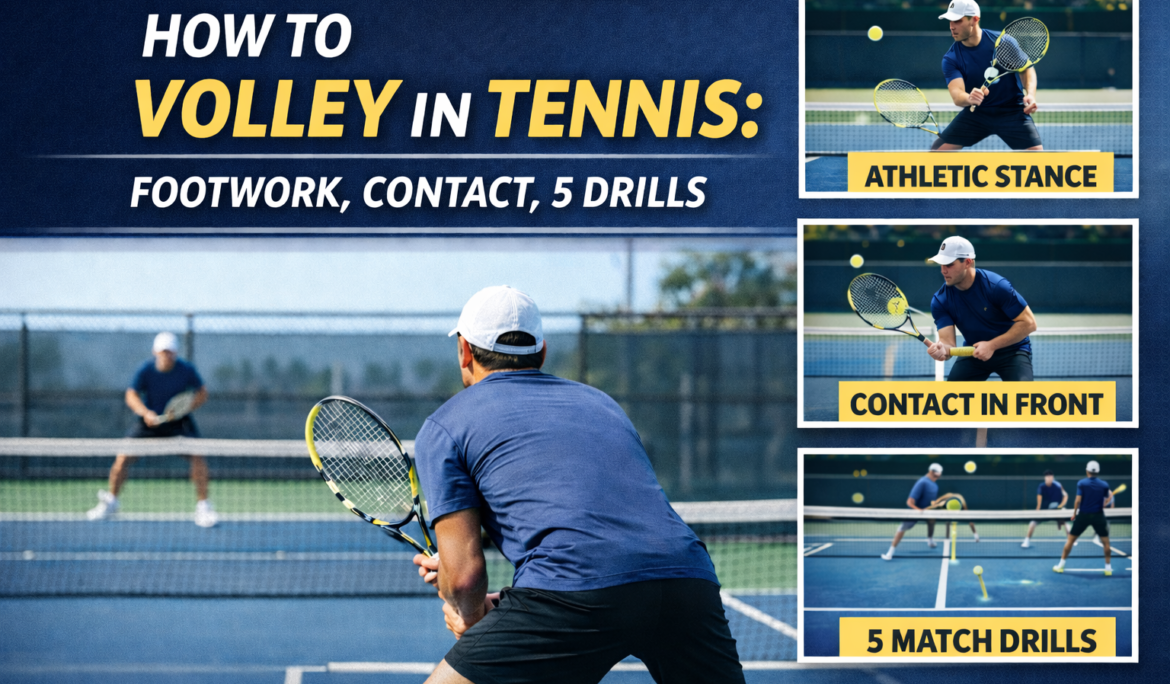
How to Volley in Tennis: Footwork, Contact, and 5 Drills That Actually Transfer to Matches
Many players practice groundstrokes for months, yet they avoid the net because volleys feel uncomfortable. However, learning how to volley in tennis is one of the fastest ways to win easier points in singles and doubles.
If your volleys pop up, go into the net, or feel shaky under pressure, the issue is usually not your hands. Instead, it is footwork timing, contact point, and simple targets.
At Infinity Racquet Club in Fulshear, TX, we teach volleys with a repeatable system that holds up in real matches. This guide explains the key mechanics and gives you five drills that transfer directly to points.
Why Volleys Break Down in Matches
Volleys are different from groundstrokes. You have less time and less swing. Therefore, small mistakes show immediately. Most beginners struggle because of these patterns:
- Standing too tall at the net
- Taking the racquet back too far
- Contacting the ball too close to the body
- Not moving through the volley
- Trying to hit winners instead of hitting safe targets
Once you fix these, volleys become simple and reliable.
The 3 Non-Negotiables of How to Volley in Tennis
1) Athletic Stance and Ready Position
Your volley starts before the ball crosses the net. Stay in a ready position that allows quick movement:
- Knees bent, chest slightly forward
- Feet shoulder-width
- Racquet up in front (not down by the hip)
- Hands quiet, grip relaxed
Beginner cue: Keep the racquet head above your wrist and in front of your body.
2) Footwork First, Then Contact
Good volleys come from your feet. If you reach for the ball, your contact becomes unstable. Therefore, take quick adjustment steps and aim for contact out in front.
- Use small steps to get aligned
- Step toward your target during contact
- Recover quickly after the volley
Beginner cue: If you feel stretched, take one extra adjustment step instead of reaching.
3) Short Punch, Not a Swing
When learning how to volley in tennis, a long backswing is the biggest mistake. Keep it compact:
- Minimal take-back
- Firm wrist, stable racquet face
- Use a short “punch” through the ball
- Finish in front, not across your body
Beginner cue: Think “block and guide” for control, then add firmness as you improve.
Where to Make Contact on a Volley
The cleanest volley contact happens:
- Out in front of your body
- Around chest to waist height (for standard volleys)
- With a slightly open racquet face (especially for low balls)
If contact happens beside your hip, you will lose control. Therefore, move your feet to meet the ball early.
Volley Targets That Win More Points
Beginners often aim too close to the lines. Instead, choose targets that reduce risk and force errors.
High-percentage volley targets
- Deep middle when you are under pressure
- To the opponent’s feet to create a tough next shot
- Crosscourt when the ball is wide and you have time
If you play doubles, middle targets also reduce angles and limit the opponent’s best passing lanes.
How to Volley in Tennis (Singles vs Doubles)
Singles Volley Basics
- Close the net after your approach shot
- Volley to open court or deep middle if unsure
- Prioritize solid first volley, then finish the point
Doubles Volley Basics
- Stay active with small split steps
- Keep volleys low to avoid easy put-aways
- Aim through the middle when the net player is aggressive
If you want serve-side strategy that pairs well with net play, link this post with: How to Return Serve in Tennis: The 3-Rule System.
5 Volley Drills That Actually Transfer to Matches
These drills focus on footwork, contact, and decision-making. Do them in short sets and track improvement.
Drill 1: Split-Step + Catch Volley (Timing Drill)
- Stand at service line with a partner feeding easy balls.
- Split step as they feed.
- Volley with a compact punch to the middle.
- Reset quickly and repeat 10 times.
Goal: Build timing and stable contact without rushing.
Drill 2: Two-Step Volley (Footwork Control)
- Partner feeds to forehand volley side.
- You take two quick steps, then punch volley.
- Repeat to backhand side.
Goal: Stop reaching and start moving through the ball.
Drill 3: Volley to the Feet (Match-Winner Pattern)
- Partner stands at baseline.
- You volley aiming low, landing near their feet area.
- Do 10 forehand volleys, then 10 backhand volleys.
Goal: Learn a safe target that creates weak replies.
Drill 4: Reflex Volleys at the Net (Doubles Transfer)
- Stand close to the net with racquet up.
- Partner feeds faster, shorter balls.
- Use minimal take-back and block volleys back.
Goal: Improve reaction and racquet stability for doubles.
Drill 5: Approach + First Volley (Real Point Pattern)
- Start at baseline.
- Hit an approach shot, move in.
- Partner feeds a passing attempt.
- You play the first volley to a big target.
Goal: Train the most important volley in singles: the first volley after the approach.
Common Volley Mistakes and Quick Fixes
| Mistake | What It Causes | Quick Fix |
|---|---|---|
| Big backswing | Late contact, net errors | Shorten take-back, keep racquet in front |
| Reaching for the ball | Pop-ups, weak volleys | Use small adjustment steps |
| Standing too upright | Slow reactions | Stay athletic, knees bent |
| Aiming for lines | Unforced errors | Aim middle or to the feet first |
| Not moving forward | Ball dies, loses control | Step toward target at contact |
Why Local Coaching Helps Your Volleys Improve Faster in Fulshear, TX
Many players search for tennis lessons near me because net play feels confusing without feedback. With coaching, volley improvements happen quickly because the fixes are simple but specific.
At Infinity Racquet Club:
- Coaches correct footwork timing and contact point
- We build match patterns for singles and doubles
- Players learn drills that translate to real points
Visit us at 6215 Teal Rd, Fulshear, TX 77441. We are open daily from 6:00 AM to 11:00 PM.
Frequently Asked Questions
What is the most important skill for volleys?
Footwork and contact in front. If you move well and contact early, the volley becomes stable and predictable.
Should I swing on volleys?
No. Use a compact punch. The ball already has pace, so your job is control and placement.
Where should beginners aim their volleys?
Aim deep middle or to the opponent’s feet. These are big targets that reduce errors and create weak replies.
How do I volley better in doubles?
Keep the racquet up, split step often, and hit low through the middle to reduce angles and stop easy poaches.
Final Thoughts: How to Volley in Tennis Without Overthinking
If you want to improve how to volley in tennis, focus on three things:
- Stay athletic with racquet up
- Move your feet to contact out in front
- Keep the swing compact and aim big targets
If you want hands-on coaching, book a free trial session at Infinity Racquet Club in Fulshear.
Call 346-318-3556 or visit infinitefuturetennis.com to get started.
This article was created with the assistance of AI technology.