



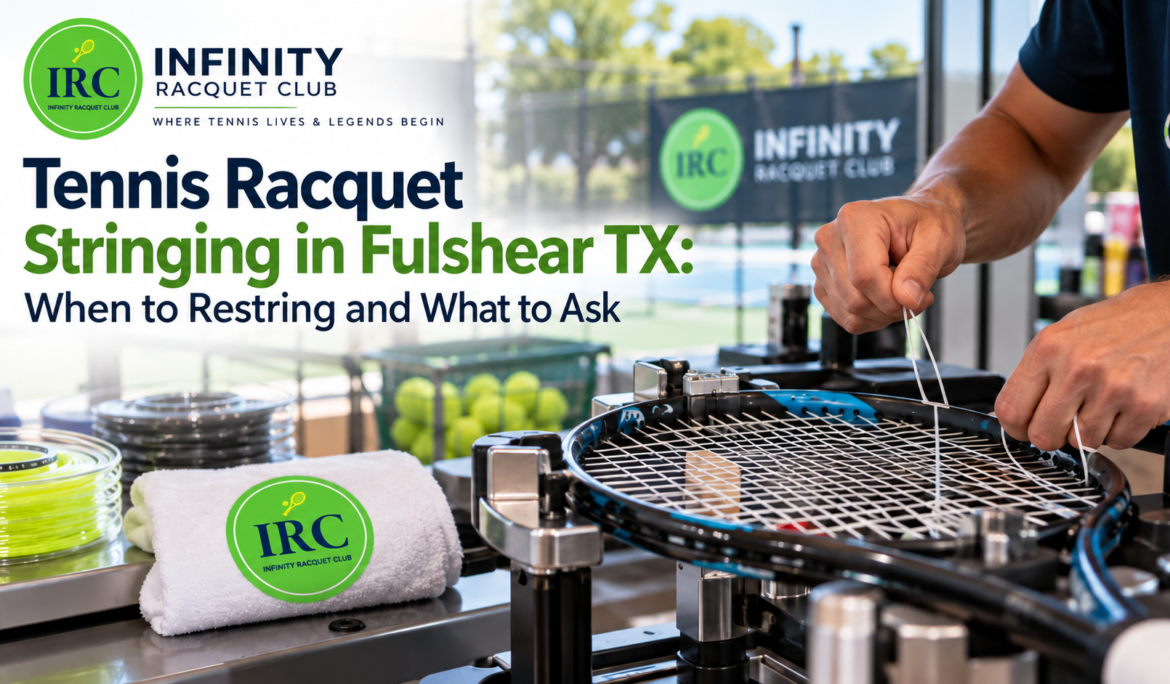
Tennis Racquet Stringing in Fulshear TX: When to Restring and What to Ask
Your tennis racquet may look fine from the outside, but the strings can tell a different story. Over time, strings lose tension, feel, control, and comfort. That can affect your timing, power, spin, and confidence on court.
For players searching for Tennis Racquet Stringing in Fulshear TX, restringing is not only for advanced players. Beginners, juniors, adults, and regular recreational players can all benefit from using strings that match their game.
Infinity Racquet Club, also known as IRC, is located at 6215 Teal Rd, Fulshear TX 77441. The club serves players near Katy & Fulshear who want tennis coaching, court time, and support with their tennis development.
This guide explains when to restring your racquet, what signs to watch for, and what questions to ask before choosing a string setup.
Why Racquet Stringing Matters
Strings are the only part of the racquet that touches the ball. That means they directly affect how the racquet feels and performs.
Even if your racquet frame is high quality, old or unsuitable strings can make tennis harder. You may lose control, feel more vibration, or struggle to generate clean contact.
Fresh strings can help improve:
- Control
- Comfort
- Power
- Spin
- Feel
- Shot consistency
- Confidence during rallies
A good racquet setup should match your level, playing style, and comfort needs.
What Happens When Tennis Strings Get Old?
Tennis strings lose tension over time. This can happen even if the strings do not break.
As strings age, they may feel loose, stiff, dull, or unpredictable. Some players notice the ball flying long. Others feel less touch on volleys or less control on groundstrokes.
Old strings can also make the racquet feel uncomfortable. If the strings no longer absorb impact well, the player may feel more shock through the arm.
Common signs of old strings include:
| Sign | What It May Mean |
| Ball flies too far | Strings may have lost tension |
| Less control | String response may be inconsistent |
| Dull feel | Strings may be worn out |
| More vibration | Comfort may be reduced |
| Strings move often | Tension or string condition may be poor |
| Less spin | String bite may be reduced |
| Fraying or notching | Strings may be close to breaking |
If the racquet feels different from normal, the strings may be part of the problem.
When Should You Restring Your Tennis Racquet?
There is no single rule for every player. The right restringing schedule depends on how often you play, your playing style, and the type of string you use.
A simple guideline is this: the more often you play, the more often you may need to restring.
| Playing Frequency | General Restringing Guide |
| Occasional player | A few times per year, or when strings feel dead |
| Weekly player | Every few months, depending on string wear |
| Frequent player | More often, especially if control changes |
| Junior or competitive player | Based on training load, tension loss, and match needs |
| String breaker | Whenever strings break or performance drops |
These are general guidelines, not fixed rules.
Players should also pay attention to feel. If the racquet no longer responds the way it used to, restringing may help.
Do Beginners Need Racquet Stringing?
Yes. Beginners often think stringing only matters for advanced players, but that is not true.
Beginners need comfort, control, and confidence. If the strings are too old, too tight, or too stiff, the racquet may feel harder to use.
For a beginner, the right string setup can help with:
- Easier contact
- Better comfort
- More forgiveness
- Less vibration
- Better control
- More confidence during practice
A beginner does not need the most expensive string. The goal is to choose a comfortable and practical setup that supports learning.
This is especially important for kids and adults who are new to the game.
How String Tension Affects Your Game
String tension refers to how tightly the strings are installed in the racquet.
Tension can affect power, control, comfort, and feel. A higher tension may feel more controlled, but it can also feel firmer. A lower tension may feel more powerful and comfortable, but it may reduce control for some players.
Here is a simple way to understand it:
| String Tension | Common Feel |
| Lower tension | More power and comfort |
| Medium tension | Balanced feel |
| Higher tension | More control and firmer response |
Players should not choose tension randomly. The best tension depends on the player’s level, swing style, comfort, and string type.
If you are unsure, ask for a practical recommendation instead of copying another player’s setup.
Different Types of Tennis Strings
Not all strings feel the same.
The string type can affect comfort, durability, spin, power, and control. Players should choose strings based on what they need, not only what professionals use.
Synthetic Gut
Synthetic gut is a common option for many recreational players.
It usually offers a balanced mix of comfort, feel, and affordability. It can be a good choice for beginners or players who want a simple setup.
Multifilament
Multifilament strings are often chosen for comfort.
They can feel softer and more arm-friendly. Adults, beginners, and players who want more comfort may prefer this type.
Polyester
Polyester strings are often used by stronger players who want control and spin.
However, polyester can feel firmer. It may not be the best choice for every beginner or player with arm discomfort.
Hybrid Setup
A hybrid setup uses two different string types in the racquet.
For example, one type may be used in the main strings and another in the cross strings. A hybrid can help balance comfort, control, durability, or spin.
Players should ask whether a hybrid setup makes sense for their level and goals.
What String Setup Is Best for Kids?
Kids need a string setup that supports comfort and learning.
A junior player should not automatically use the same strings as an adult or advanced player. Younger players often need a more forgiving setup that helps them build confidence.
Parents should ask:
- Is this string comfortable for a junior player?
- Is the tension suitable for my child’s level?
- Will this setup help with control?
- Is durability important for my child’s training schedule?
- Should we choose comfort over spin or power?
A good junior setup should support development without making the racquet feel too harsh.
What String Setup Is Best for Adults?
Adults may need different string setups depending on their goals.
An adult beginner may want comfort and control. A returning player may want a familiar feel. A league player may want better consistency or spin. An adult with arm discomfort may need a softer setup.
Adults should consider:
- Comfort
- Playing frequency
- Arm feel
- Control needs
- Power level
- Doubles or singles play
- Current skill level
- String durability
The best setup is the one that helps the player enjoy tennis and play consistently.
What String Setup Is Best for Frequent Players?
Frequent players usually notice string changes faster.
If you play several times per week, your strings may lose tension quickly. You may also notice changes in control, depth, spin, and feel.
Frequent players should track:
- When the racquet was last strung
- What string was used
- What tension was used
- How the racquet felt after restringing
- When performance started to drop
Keeping this record makes future stringing easier. It also helps players avoid guessing every time.
What Questions Should You Ask Before Restringing?
Before restringing your racquet, ask practical questions.
A good stringing conversation should help match the setup to your needs.
| Question | Why It Helps |
| What string type fits my level? | Helps avoid the wrong setup |
| What tension should I choose? | Affects control, power, and comfort |
| Should I prioritize comfort or durability? | Helps match your playing style |
| Is my current setup too stiff? | Useful if you feel discomfort |
| How often should I restring? | Helps plan maintenance |
| Should I try the same string again? | Keeps consistency if the setup works |
| Should I change anything? | Helps improve feel or performance |
These questions are more useful than asking only for the cheapest option.
Signs Your Racquet Needs Restringing Before It Breaks
Some players wait until strings break. However, strings can lose performance before they snap.
You may need restringing if:
- The ball starts flying long
- Your shots feel less controlled
- The racquet feels dull
- The strings move too much
- Spin feels reduced
- You feel more vibration
- You cannot trust your normal swing
- Your strings look heavily worn
A fresh string job can restore feel and confidence.
Racquet Stringing and Arm Comfort
Comfort matters, especially for adults and frequent players.
The wrong string setup can make the racquet feel harsh. High tension or stiff strings may feel uncomfortable for some players.
If you feel arm discomfort, do not ignore it. Ask whether a softer string, different tension, or more comfortable setup may help.
Players should also consider technique, grip size, warm-up habits, and training load. Stringing is only one part of comfort, but it can make a noticeable difference.
Should You Use the Same String Every Time?
If your current setup feels good, staying consistent can be helpful.
Using the same string and tension gives you a familiar feel. This helps players build confidence and avoid sudden changes.
However, a change may make sense if:
- The racquet feels too stiff
- You want more comfort
- You need better durability
- You want more control
- You are breaking strings often
- Your level has changed
- Your coach recommends a different setup
Make changes gradually. Big changes can make the racquet feel unfamiliar.
How Racquet Stringing Supports Lessons and Match Play
A good Tennis Lesson helps improve technique, timing, and decision-making. A good string setup supports that work.
If the strings are dead or unsuitable, players may struggle to feel progress. A player may think their technique is the problem, when the racquet setup is also affecting the shot.
Fresh and suitable strings can help players:
- Feel the ball better
- Trust their swing
- Improve control
- Reduce frustration
- Practice with more consistency
- Prepare for match play
For players taking Tennis Lesson IRC, proper equipment care can support better on-court development.
How to Prepare Your Racquet for Stringing
Before bringing your racquet for stringing, check a few details.
Write down what you currently use, if you know it. This may include string type, tension, and when it was last strung.
Also think about what you want to improve.
Ask yourself:
- Do I want more control?
- Do I want more comfort?
- Do I need more durability?
- Do I want more power?
- Am I breaking strings often?
- Does my arm feel fine?
- Did I like my previous setup?
These answers help guide the string recommendation.
Common Racquet Stringing Mistakes
Players often make stringing decisions too quickly.
Common mistakes include:
- Waiting too long to restring
- Choosing strings only by price
- Copying a professional player’s setup
- Using a string that is too stiff
- Choosing tension without guidance
- Ignoring arm comfort
- Not tracking previous string setups
- Changing too many things at once
A better approach is to choose a setup that matches your level, playing frequency, and comfort needs.
Why Local Racquet Stringing Is Convenient
Local racquet stringing can make tennis easier to manage.
Players do not have to wait until strings break or travel far for basic equipment care. Local service can help players stay consistent with lessons, practice, and match preparation.
For families near Fulshear, Katy, Cross Creek Ranch, Firethorne, and nearby areas, local restringing can be useful for juniors, adults, and regular players.
Players should contact IRC directly to confirm current racquet stringing availability, turnaround time, and string options.
What to Ask IRC About Racquet Stringing
Before getting your racquet restrung, contact IRC and ask about current service details.
Useful questions include:
- Is racquet stringing currently available?
- What string options are offered?
- What tension do you recommend for my level?
- How long does restringing usually take?
- Can you match my previous setup?
- Can you recommend a more comfortable setup?
- What should I do if I keep breaking strings?
These questions help you get a setup that fits your game.
FAQs About Tennis Racquet Stringing in Fulshear TX
What is tennis racquet stringing?
Tennis racquet stringing is the process of replacing old or broken strings with new strings. It helps restore feel, control, comfort, and performance.
How often should I restring my tennis racquet?
It depends on how often you play, your string type, and how the racquet feels. If the strings feel dead, loose, uncomfortable, or unpredictable, it may be time to restring.
Do beginners need racquet stringing?
Yes. Beginners can benefit from comfortable and suitable strings because they help with control, feel, and confidence.
Should I wait until my strings break?
Not always. Strings can lose tension and performance before they break. If your racquet feels dull or unpredictable, restringing may help.
What tension should I use?
The right tension depends on your level, string type, comfort needs, and playing style. Ask for a recommendation instead of guessing.
Are softer strings better for comfort?
Softer strings may feel more comfortable for many players. However, the best choice depends on the racquet, tension, and player needs.
Does IRC offer tennis racquet stringing in Fulshear TX?
IRC offers tennis-related services and is located in Fulshear near Katy. Players should contact IRC directly to confirm current racquet stringing availability and details.
Racquet strings affect how your tennis racquet feels, responds, and performs. Even if the frame looks fine, old or unsuitable strings can reduce control, comfort, and confidence.
For players searching for Tennis Racquet Stringing in Fulshear TX, the best approach is to restring before performance drops too far and ask the right questions about string type, tension, comfort, and playing frequency.
Players near Katy & Fulshear can contact Infinity Racquet Club at 6215 Teal Rd, Fulshear TX 77441, call 346-318-3556, or email infinityracquetclub@gmail.com to confirm current racquet stringing details.