



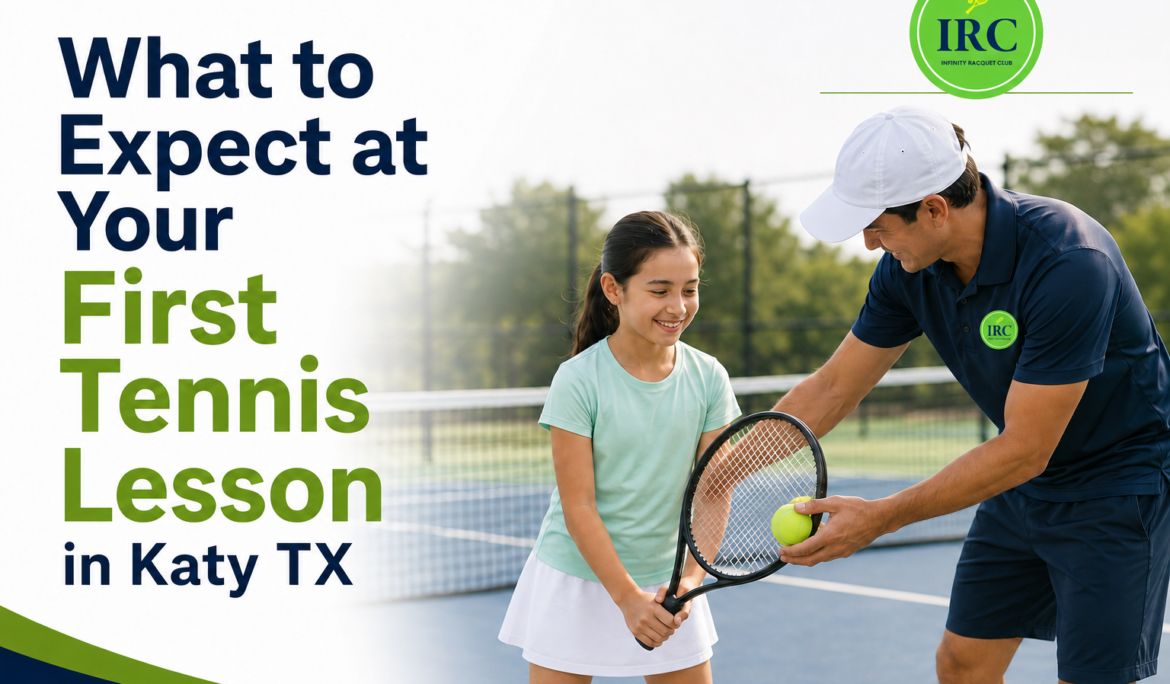
What to Expect at Your First Tennis Lesson in Katy TX
Starting your first tennis lesson in Katy TX can feel exciting and a little nervous at the same time. You may wonder what to bring, what the coach will teach, how hard the lesson will be, and whether you or your child will feel comfortable on the court.
The good news is simple: a first tennis lesson is not about perfection. It is about learning the basics, getting comfortable, and enjoying the game.
For families in Katy & Fulshear, Infinity Racquet Club, also known as IRC, offers a welcoming tennis environment for beginners, kids, teens, and adults. IRC is located at 6215 Teal Rd, Fulshear TX 77441, serving players from Katy, Fulshear, Cross Creek Ranch, Firethorne, Cinco Ranch, and nearby communities. IRC highlights expert coaching, maintained courts, lighting for evening play, tournaments, events, and a community-focused tennis experience.
This guide explains what to expect before, during, and after your first Tennis Lesson.
Your First Tennis Lesson Is About Getting Comfortable
Many beginners think they need to know tennis before taking a lesson. That is not true.
A beginner tennis lesson is designed for people who are new to the game. You do not need to know how to serve, keep score, or rally before you arrive.
Your first lesson will usually focus on:
- Basic court safety
- How to hold the racket
- Ready position
- Simple footwork
- Forehand basics
- Backhand basics
- Ball contact
- Basic rally drills
- Confidence building
The coach should explain everything step by step. A good beginner coach will not expect you to play perfectly.
The goal is to help you feel comfortable on the court.
What to Bring to Your First Tennis Lesson
Before your first lesson, bring the right basics.
You do not need expensive equipment. However, you should come prepared.
Bring:
- Tennis racket
- Tennis shoes or court-friendly athletic shoes
- Comfortable athletic clothing
- Water bottle
- Towel
- Hat or visor
- Sunscreen for outdoor lessons
- Positive attitude
For children, parents may also want to bring an extra water bottle and a small snack for after class.
If you are unsure about racket size, ask before buying. A beginner does not need the most expensive racket. They need the right size and weight.
What Should Kids Expect at Their First Tennis Lesson?
Kids need a first tennis lesson that feels fun and active.
A child’s first class should not feel too technical. Young beginners learn best through movement, games, simple instructions, and repetition.
A kids’ beginner lesson may include:
- Running and stopping games
- Ball bouncing drills
- Racket control exercises
- Catching and tossing
- Simple forehand contact
- Partner activities
- Listening practice
- Short rallies
For children, the first goal is not winning. It is confidence.
A child may miss the ball many times. That is normal. A good coach will make mistakes feel part of learning.
Parents should look for one main sign after the first lesson: does the child want to come back?
What Should Adults Expect at Their First Tennis Lesson?
Adults may feel nervous before starting tennis. Some worry they are too old, too rusty, or not fit enough.
A good adult beginner lesson should be welcoming and paced correctly.
Adults can expect to learn:
- Proper grip
- Ready position
- Forehand basics
- Backhand basics
- Footwork
- Simple rally drills
- Basic serving introduction
- Court positioning
If you are returning after years away, the coach may first check your current movement and technique. Then they can help you rebuild timing, balance, and control.
Adults should not rush. Tennis improvement comes through repetition.
What Happens During the First Lesson?
Every coach may structure lessons differently. However, most beginner tennis lessons follow a simple pattern.
1. Warm-Up
The lesson usually starts with light movement.
This may include:
- Jogging
- Side steps
- Arm circles
- Dynamic stretching
- Balance drills
- Short footwork activities
Warm-up helps reduce injury risk and prepares the body for movement.
2. Racket Grip and Ready Position
Next, the coach may explain how to hold the racket and stand before hitting.
The ready position is important because it prepares the player to move quickly.
Beginners often learn:
- How to hold the racket
- Where to place the feet
- How to bend the knees slightly
- How to watch the ball
- How to recover after a shot
These basics make every stroke easier.
3. Forehand Practice
The forehand is usually one of the first strokes taught.
A coach may start with slow, simple feeds. The goal is to help the player make clean contact.
You may practice:
- Turning the shoulders
- Stepping toward the ball
- Swinging low to high
- Finishing the swing
- Recovering after contact
At first, the ball may not always go where you want. That is expected.
4. Backhand Practice
The backhand may feel less natural for beginners. The coach will usually keep it simple.
You may learn:
- One-hand or two-hand backhand setup
- Shoulder turn
- Contact point
- Follow-through
- Balance
For kids and new adults, a two-hand backhand is often easier to control.
5. Simple Rally Drills
Once basic contact improves, the coach may introduce short rallies.
A rally means hitting the ball back and forth.
Beginner rallies may be short at first. Even two or three successful shots in a row is progress.
The coach may use softer balls or slower feeds for beginners.
6. Serve Introduction
Some first lessons include a basic serve introduction. Others may save serving for the next lesson.
If serving is included, the coach may teach:
- Proper stance
- Ball toss
- Racket preparation
- Contact point
- Follow-through
The serve is one of the harder tennis skills, so beginners should be patient.
7. Cool-Down and Feedback
At the end, the coach may give simple feedback.
They may explain:
- What you did well
- What to practice
- What the next lesson will focus on
- Whether group or private lessons are best
- What equipment you may need
Good feedback helps beginners feel clear about the next step.
Will the First Tennis Lesson Be Hard?
The first lesson should be active, but not overwhelming.
You may feel tired because tennis uses movement, balance, and coordination. However, the coach should match the lesson to your age and level.
For beginners, a good coach will not push too hard too early.
The lesson should feel:
- Welcoming
- Organized
- Safe
- Active
- Encouraging
- Beginner-friendly
If you are completely new, you may miss many balls. That does not mean you are doing badly. Tennis takes practice.
What If You Have Never Played Tennis Before?
That is completely fine.
Many players start with zero experience. You do not need to know scoring, strokes, or court positions before your first class.
A beginner-friendly coach will teach everything from the ground up.
You can start by learning:
- How to hold the racket
- How to stand
- How to move
- How to make contact
- How to control the ball
- How to rally
- How to serve later
Every player starts somewhere.
The most important thing is to stay relaxed and willing to learn.
What If Your Child Is Nervous?
It is common for children to feel nervous before the first lesson.
Parents can help by keeping the experience low-pressure.
Before the lesson, say:
- “Just try your best.”
- “You do not need to be perfect.”
- “The coach will help you.”
- “It is okay to miss.”
- “Have fun and listen.”
Avoid saying things like:
- “Make sure you win.”
- “Do not embarrass yourself.”
- “You better be good.”
- “I paid for this, so focus.”
The first lesson should feel safe and positive.
A nervous child may need one or two lessons before they feel comfortable. That is normal.
How Long Is a First Tennis Lesson?
Lesson length may vary by age and program.
Young kids may do better with shorter lessons because their attention span is shorter. Teens and adults can usually handle longer sessions.
Common lesson lengths include:
| Player Type | Common Lesson Length |
| Young kids | 30–45 minutes |
| Older kids | 45–60 minutes |
| Teens | 60 minutes |
| Adults | 45–60 minutes |
| Private lessons | 30–60 minutes |
| Group lessons | 45–90 minutes depending on program |
A first lesson does not need to be long to be useful. Quality matters more than length.
What Should Parents Watch During the First Lesson?
Parents should not judge the first lesson only by how many balls the child hits over the net.
Instead, watch the overall environment.
Look for:
- Is the coach patient?
- Does the coach explain clearly?
- Is the lesson safe?
- Is the child active?
- Are mistakes handled positively?
- Does the child look comfortable?
- Is the group level appropriate?
- Does the coach give feedback?
- Does the child want to return?
A first lesson is successful when the player feels encouraged and understands the next step.
Group Lesson or Private Lesson for the First Class?
Both can work.
Group Lesson
A group lesson is good if the player:
- Enjoys being around others
- Is a child beginner
- Wants a social environment
- Needs fun and confidence
- Learns well by watching others
Private Lesson
A private lesson is good if the player:
- Feels nervous in groups
- Needs one-on-one attention
- Is an adult beginner
- Has specific goals
- Wants faster correction
- Is returning after years away
Many players begin with a trial or group lesson, then add private lessons later.
For Tennis Lesson IRC, families can explore options based on age, comfort, and goals.
What Happens After the First Tennis Lesson?
After the first lesson, the coach may suggest a next step.
This could include:
- Joining a beginner group
- Continuing weekly lessons
- Trying a private lesson
- Moving into a junior program
- Practicing basic drills at home
- Getting the right racket size
- Booking another session
Parents should ask:
“What should my child practice before the next lesson?”
Adults can ask:
“What is the one thing I should focus on this week?”
Simple practice between lessons helps players improve faster.
How Soon Will You Improve?
Beginners often notice small improvements after the first few lessons.
You may notice:
- Better contact
- More comfort holding the racket
- Improved movement
- More confidence
- Fewer missed balls
- Better understanding of the game
Most players need several lessons before rallies become consistent.
Tennis improvement takes time. However, each lesson should give you a clearer understanding of what to do next.
Why Choose IRC for Your First Tennis Lesson?
For players in Katy & Fulshear, IRC offers a local tennis environment with coaching, courts, and community.
Families and players may choose IRC because it offers:
- Expert coaching
- Beginner-friendly environment
- Junior and adult programs
- Private and group lessons
- Maintained courts
- Professional lighting
- Flexible membership options
- Tournaments and events
- Free trial opportunity
- Welcoming community
IRC describes itself as more than just a tennis club. It aims to create a vibrant community for tennis lovers of all levels.
This matters for beginners because the first environment can shape confidence.
First Tennis Lesson Checklist
Use this checklist before arriving.
| Item | Ready |
| Tennis racket | |
| Tennis shoes or athletic shoes | |
| Comfortable clothing | |
| Water bottle | |
| Towel | |
| Sunscreen | |
| Hat or visor | |
| Arrive a little early | |
| Ask coach about level | |
| Stay relaxed and open to learning |
Preparation helps the first lesson feel smoother.
Common First-Lesson Mistakes to Avoid
Expecting Perfect Shots
You will miss. That is normal.
Buying Expensive Equipment Too Early
Start with the right basics. Advanced equipment can come later.
Comparing With Others
Every player learns at a different speed.
Skipping Warm-Up
Warm-up helps prevent discomfort and injury.
Trying to Hit Too Hard
Control matters before power.
Getting Discouraged Too Quickly
Tennis takes repetition. The first lesson is only the beginning.
FAQs About Your First Tennis Lesson in Katy TX
What should I expect at my first tennis lesson in Katy TX?
You can expect a beginner-friendly lesson with warm-up, grip instruction, basic footwork, forehand and backhand practice, simple drills, and coach feedback.
Do I need tennis experience before my first lesson?
No. Beginner tennis lessons are designed for players with little or no experience.
What should my child bring to the first tennis lesson?
Your child should bring a racket, tennis shoes, athletic clothes, water, sunscreen, and a positive attitude.
Should beginners start with private or group tennis lessons?
Group lessons are great for social learning and confidence. Private lessons are useful for one-on-one attention and faster correction.
Will I learn to serve in the first tennis lesson?
Some first lessons include basic serve introduction. Others focus first on grip, contact, movement, forehand, and backhand.
Does IRC offer beginner tennis lessons near Katy & Fulshear?
Yes. IRC serves players in Katy & Fulshear and offers tennis coaching for beginners, juniors, teens, and adults.
How do I know if my first lesson went well?
A first lesson went well if you felt comfortable, learned something new, stayed active, and want to return.
Your first tennis lesson in Katy TX should feel welcoming, active, and encouraging. You do not need experience. You only need the right attitude, basic equipment, and a coach who understands beginners.
A good first lesson helps you learn the basics, feel comfortable on court, and understand your next step.
For players in Katy & Fulshear, Tennis Lesson IRC offers a supportive place to start tennis at any age. Whether the lesson is for a child, teen, or adult, the right first experience can build confidence and make tennis enjoyable from the beginning.
| Book Your Free Trial: infinityracquetclub.com | Call 346-318-3556 | Email infinityracquetclub@gmail.com |